











Contents
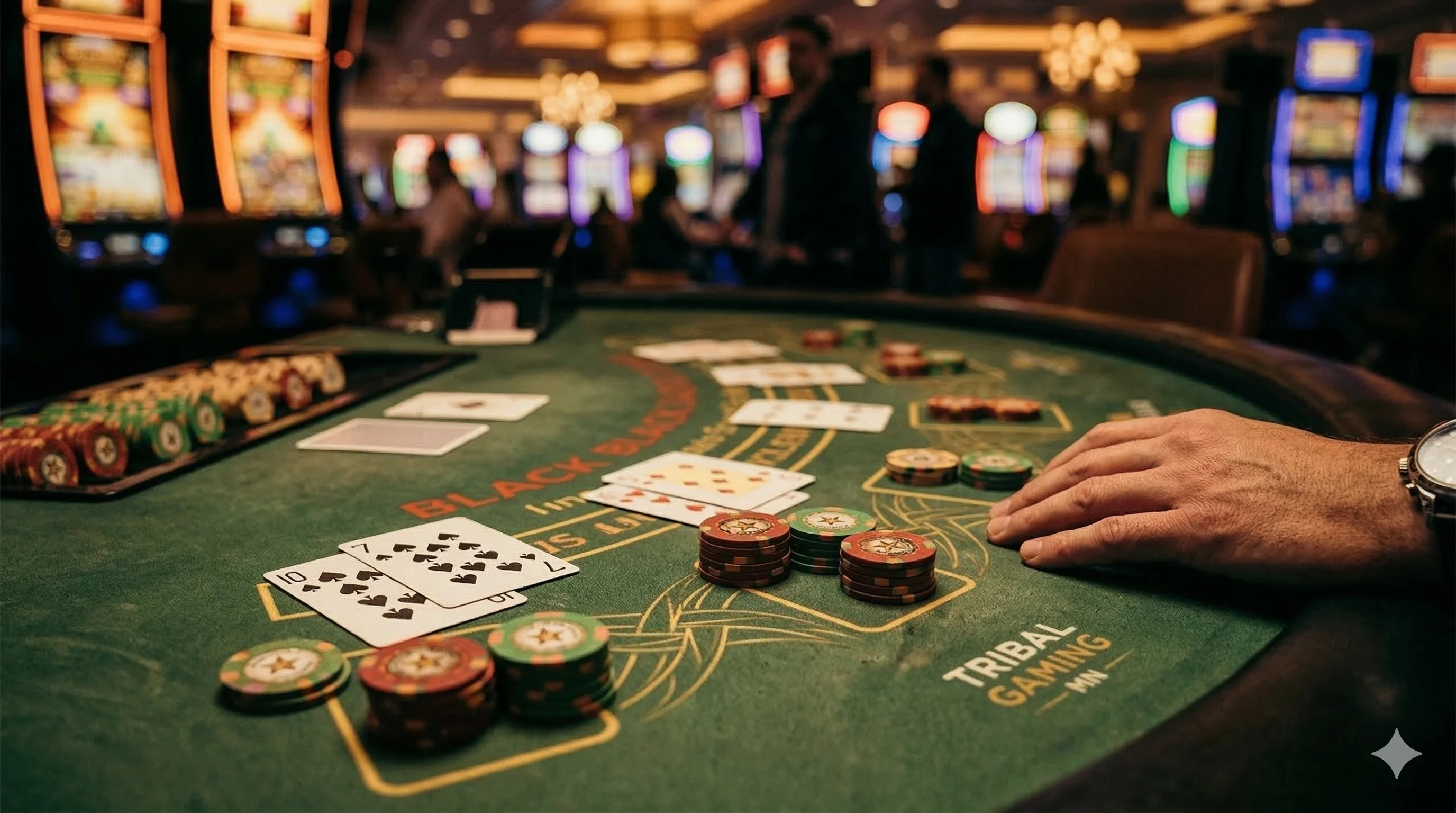
You're at Mystic Lake Casino, the slot machines are ringing, the blackjack tables are packed, and everything is 100% legal. But then you pull out your phone to bet on the Vikings game, and... you can't. Welcome to Minnesota gambling in 2026.
Here's the short answer: yes, gambling is legal in Minnesota, but not all types. The state has 21 tribal casinos, two card rooms, a massive charitable gambling industry, and a state lottery. But sports betting? Still illegal. Online casinos? Nope. It's a patchwork of laws that can be confusing.
This guide breaks down every type of gambling in Minnesota, the key statutes, what's legal, what's pending, and what's flat-out prohibited. Plus, we built a free interactive checker so you can look up any gambling type instantly.
TL;DR, Minnesota Gambling Quick Reference
What's Legal and What's Not in 2026
| Gambling Type | Status | Min Age | Governing Body |
|---|---|---|---|
| Tribal Casinos | Legal | 18+ | IGRA / Tribal-State Compacts |
| Card Rooms (Canterbury, Running Aces) | Legal | 18+ | MN Racing Commission |
| Charitable Gambling | Legal | 18+ | MN Gambling Control Board |
| State Lottery | Legal | 18+ | MN State Lottery |
| Horse Racing (Live & ADW) | Legal | 18+ | MN Racing Commission |
| Daily Fantasy Sports | Legal | 18+ | MN DFS Law (2016) |
| Sports Betting | Not Legal | N/A | No law passed |
| Online Casino / iGaming | Not Legal | N/A | Not authorized |
| Online Poker | Not Legal | N/A | Not authorized |
| Sweepstakes Casinos | Gray Area | 18+ | Not regulated |
| Offshore Sites | Illegal | N/A | §609.76 violation |
The bottom line: Minnesota has plenty of legal gambling options, tribal casinos, card rooms, charitable gaming, and the lottery. But if you're hoping to bet on sports or play online casino games from your couch, you'll have to wait.
What Types of Gambling Are Legal in Minnesota?
Minnesota's gambling landscape is one of the most diverse in the Midwest. Let's walk through every legal option available in 2026.
Tribal Casinos, 21 Venues Across the State
Minnesota is home to 21 tribal casinos operated by 11 sovereign Native American tribes. These casinos operate under the Indian Gaming Regulatory Act (IGRA) of 1988 and tribal-state compacts negotiated with the governor's office.
Major tribal casinos include:
- Mystic Lake Casino Hotel (Shakopee Mdewakanton Sioux Community), the largest, with 4,000+ slot machines
- Treasure Island Resort & Casino (Prairie Island Indian Community)
- Grand Casino Hinckley & Mille Lacs (Mille Lacs Band of Ojibwe)
- Jackpot Junction (Lower Sioux Indian Community)
- Shooting Star Casino (White Earth Nation)
- Black Bear Casino Resort (Fond du Lac Band)
- Northern Lights Casino (Leech Lake Band)
Tribal casinos offer slot machines, blackjack, poker, bingo, and other table games. The minimum age is 18 at most tribal casinos (some set it at 21 for alcohol areas). If you're planning a trip, brush up on basic blackjack strategy before hitting the tables, it can cut the house edge below 0.5%. For a look at how European countries like Spain regulate gambling, see our international comparison.
Canterbury Park and Running Aces
Minnesota has two licensed card rooms that operate under state law (not tribal compacts):
- Canterbury Park (Shakopee), horse racing + card room with poker and table games
- Running Aces Casino, Hotel & Racetrack (Columbus), same model, simulcast racing + card room
These venues offer poker tournaments, live table games, and simulcast horse racing. They're regulated by the Minnesota Racing Commission under Chapter 240. Canterbury Park hosts one of the largest poker tournaments in the Midwest.
Charitable Gambling, Pull-Tabs, Bingo, Raffles
This is where Minnesota truly stands out. The state's charitable gambling industry generates over $2 billion annually, more than most states' entire casino industries. We'll dive deeper into this in a dedicated section below.
Minnesota State Lottery
The Minnesota State Lottery launched in 1990 and offers Powerball, Mega Millions, Lotto America, and state-specific scratch-off and draw games. You must be 18+ to play, and tickets are available at retail locations statewide. Online lottery purchases are available through the official website. Wondering about lottery prediction methods? We've analyzed the math.
| Gambling Type | Status |
|---|---|
| Tribal Casinos (21) | 3 |
| Card Rooms | 3 |
| Charitable Gambling | 3 |
| State Lottery | 3 |
| Horse Racing | 3 |
| Daily Fantasy Sports | 3 |
| Sweepstakes Casinos | 2 |
| Sports Betting | 1 |
| Online Casino | 0 |
| Offshore Sites | 0 |
Is Sports Betting Legal in Minnesota?
No. As of March 2026, sports betting is not legal in Minnesota. This is the single biggest gap in the state's gambling framework, and the most politically contentious.
Legislative History (2022–2026)
Sports betting bills have been introduced every session since 2022, but none have made it to the governor's desk:
| Year | Bill | What Happened |
|---|---|---|
| 2022 | SF 3531 | Passed Senate, stalled in House |
| 2023 | HF 2468 / SF 1949 | Conference committee, no agreement |
| 2024 | HF 2865 | Hearings held, no floor vote |
| 2025 | Multiple drafts | Early drafts circulated, no formal bill |
The pattern is clear: there's bipartisan support for legal sports betting, but the details keep killing it.
Why Sports Betting Hasn't Passed Yet
The core issue is who gets to operate sportsbooks:
- Tribes want exclusive rights to mobile and in-person sports betting, arguing that compacts give them primary gambling authority
- Commercial operators (DraftKings, FanDuel, BetMGM) and card rooms want market access
- Horse racing interests (Canterbury Park, Running Aces) want on-site sportsbooks
- Legislature is caught between tribal sovereignty arguments and tax revenue from commercial operators
Until the tribal-commercial split is resolved, no bill will pass. If you're serious about making a living from sports betting, you'll need to do it from a state where it's legal, for now.
When Will Minnesota Legalize Sports Betting?
The most realistic timeline is 2026-2027. Governor Tim Walz has expressed support, and neighboring states (Iowa, South Dakota) already have legal sports betting, creating pressure. But "realistic" doesn't mean "guaranteed", the tribal sovereignty question has no easy answer.
If you're in Minnesota and want to scratch the sports itch legally, check out DFS platforms (legal) or drive to Iowa (sports betting live since 2019). Use our odds converter to compare lines when you do.
Is Online Gambling Legal in Minnesota?
No. Online casino games, online poker, and online sports betting are not authorized in Minnesota. No bills have been introduced for online casino legalization.
What Minnesota Law Says About Internet Gambling
Minnesota's gambling statutes (Chapters 349, 349A, and 240) were written before the internet era and don't explicitly address online gambling. However, the state has not passed any legislation to authorize it, which means:
- No licensed online casino operators
- No legal online poker rooms
- No regulated online sports betting
- No iGaming framework or proposed bills
The only legal online gambling activities are DFS (under the 2016 law), lottery ticket purchases (via the official lottery website), and horse racing ADW (advance deposit wagering through licensed platforms like TVG).
Sweepstakes Casinos, The Gray Area
Sweepstakes casinos like Chumba Casino, Stake.us, LuckyLand Slots, and WOW Vegas operate in Minnesota using a dual-currency model that technically classifies them as sweepstakes contests rather than gambling.
Minnesota has not passed any legislation specifically addressing sweepstakes casinos, neither authorizing nor banning them. Compare this to how Maine's online gambling laws handle sweepstakes, where an active ban bill (LD 1811) was introduced.
The risk: if Minnesota's Attorney General decides sweepstakes casinos violate existing gambling laws, players could face enforcement action. Track your play carefully, use our responsible gambling self-assessment to stay in control.
DraftKings, FanDuel, and DFS in Minnesota
What DFS Platforms Work in Minnesota
Daily fantasy sports are fully legal in Minnesota. The state passed a dedicated DFS law in 2016 (Minnesota Statutes §325F.101–.103) that explicitly authorizes paid fantasy contests.
Available platforms:
- DraftKings, full DFS contests (NFL, NBA, MLB, NHL, golf, etc.)
- FanDuel, same range of DFS contests
- Underdog Fantasy, pick'em style DFS
- PrizePicks, over/under player projections
- Sleeper, season-long and best ball
You must be 18+ and physically in Minnesota to play. Winnings are taxed as regular income, check federal tax rules for gambling losses for deduction details.
Why DFS Isn't Sports Betting
This confuses a lot of people. Here's the difference:
- DFS: You draft a lineup of players and compete based on their statistical performance. It's classified as a game of skill under Minnesota law.
- Sports betting: You wager on the outcome of a game or event. It's classified as gambling and is not legal in Minnesota.
You can use DraftKings for DFS but not for sports betting in Minnesota. The sports betting tab in the app will show you can't place wagers in your location. For NBA betting systems and similar strategies, you'd need to be in a legal sports betting state.
Charitable Gambling in Minnesota, The $2B Industry
Minnesota's charitable gambling industry is enormous, and it's something most people outside the state don't realize.
Minnesota Statutes Chapter 349
Chapter 349 governs all lawful charitable gambling in Minnesota. Under this law, licensed nonprofit organizations can conduct:
- Pull-tabs (paper and electronic), this is the biggest revenue generator
- Bingo, traditional hall bingo and linked games
- Raffles, including large progressive raffles
- Paddlewheels, wheel-spinning games at events
- Tipboards, number-drawing games
The Minnesota Gambling Control Board (MGCB) oversees licensing, compliance, and enforcement. In fiscal year 2025, charitable gambling generated over $2.3 billion in gross receipts, with pull-tabs accounting for roughly 80% of that total.
The money flows back to communities: licensed organizations must use profits for lawful purposes, community projects, youth sports, veterans' organizations, and other charitable activities. This is why you'll find pull-tab machines in bars and restaurants across the state.
How to Get a Gambling Permit
If you represent a nonprofit and want to operate charitable gambling in Minnesota, here's the process:
- Your organization must be a registered nonprofit with at least 3 years of existence
- Apply for a license from the Minnesota Gambling Control Board
- Designate a gambling manager who passes background checks
- Submit operating plans and financial projections
- Maintain monthly reporting to the MGCB
Types of Charitable Gambling Licenses
| License Type | Annual Fee | What It Covers |
|---|---|---|
| Class A | $150 | Raffles only (under $50,000 gross) |
| Class B | $300 | Bingo, paddlewheels, tipboards, raffles |
| Class C | $500 | All forms including pull-tabs |
| Class D | $1,500 | High-volume operations (over $500K gross) |
The electronic pull-tab machines you see at bars are typically operated under Class C or D licenses. If you've ever played one, you know they're a major part of Minnesota's gambling culture.
Minnesota Gambling Age Requirements
Age by Gambling Type
| Gambling Type | Minimum Age | Notes |
|---|---|---|
| Tribal Casinos | 18+ | Some areas 21+ for alcohol |
| Canterbury Park / Running Aces | 18+ | Card room and racing |
| Charitable Gambling | 18+ | Pull-tabs, bingo, raffles |
| Minnesota State Lottery | 18+ | Scratch-offs and draw games |
| Daily Fantasy Sports | 18+ | DraftKings, FanDuel, etc. |
| Horse Racing (ADW) | 18+ | TVG, TwinSpires |
| Sports Betting | N/A | Not legal |
| Online Casino | N/A | Not legal |
Minnesota has one of the simplest age structures in the country: 18+ for everything that's legal. There's no 21+ gambling requirement because sports betting (which typically requires 21+ in other states) isn't authorized.
This is notably different from states like Oklahoma, where different gambling types have different age requirements, or New Jersey, where you can explore how NJ handles gambling taxation across casinos, sports betting, and online platforms. Minnesota keeps it simple, if it's legal, you need to be 18.
Minnesota Gambling Laws, Key Statutes
Chapter 349: Lawful Gambling
This is the foundation of Minnesota's gambling regulation. Chapter 349 covers:
- Definitions of lawful gambling types (§349.12)
- Licensing requirements for organizations and gambling managers (§349.16)
- Prohibited conduct, operating without a license, cheating, underage gambling (§349.22)
- Gambling Control Board powers and enforcement (§349.151)
- Electronic pull-tab regulations (§349.163)
- Tax provisions, gambling tax rates and reporting (§349.212)
The Gambling Control Board has broad authority to investigate violations, revoke licenses, and impose penalties. If you operate charitable gambling without proper licensing, you face gross misdemeanor charges under §349.22.
IGRA 1988 and Tribal Compacts
The Indian Gaming Regulatory Act (IGRA) of 1988 is the federal law that authorizes tribal casino gambling. Under IGRA, tribes can operate:
- Class I gaming: Traditional tribal games (unregulated)
- Class II gaming: Bingo and similar (tribal regulation + NIGC oversight)
- Class III gaming: Casino-style games, slots, blackjack, poker (requires tribal-state compact)
Minnesota's 11 tribes operate Class III gaming under compacts negotiated with the state. These compacts specify game types, regulatory standards, and revenue-sharing arrangements.
Chapter 240: Horse Racing and Card Clubs
Chapter 240 governs horse racing (live and simulcast) and card clubs at Canterbury Park and Running Aces. The Minnesota Racing Commission oversees:
- Race day operations and horse welfare
- Card room games (poker, table games)
- Simulcast wagering from out-of-state tracks
- Advance deposit wagering (online/phone)
Canterbury Park hosts live thoroughbred and quarter horse racing from May through September. Both card rooms offer year-round poker and table games. If you enjoy poker strategy, explore our breakdown of popular slot games like Buffalo during your next casino visit for variety.
Attorney General Enforcement
The Minnesota Attorney General has authority under §609.75–.76 to prosecute illegal gambling. This covers:
- Operating unlicensed gambling operations
- Bookmaking (illegal sports betting)
- Using offshore gambling sites (§609.76)
- Gambling device fraud
Penalties range from misdemeanor (simple gambling) to felony (operating a gambling business). The AG's office has historically focused on organized illegal gambling rather than individual bettors, but the law is clear: unregulated gambling carries criminal risk.
History of Gambling in Minnesota
From Bingo to Tribal Casinos (1945–1999)
Minnesota's gambling history reflects the national arc, from prohibition to gradual legalization:
- 1945: Legislature authorizes charitable bingo for nonprofits
- 1981: Legislature passes the Charitable Gambling Act (predecessor to Chapter 349)
- 1985: Canterbury Downs (now Canterbury Park) opens for horse racing
- 1988: IGRA passes Congress, opening the door for tribal casinos
- 1989: Mystic Lake Casino opens (then a small bingo hall)
- 1990: Minnesota State Lottery launches
- 1991: Grand Casino Hinckley opens; tribal gaming expands rapidly
- 1999: 18 tribal casinos operating, charitable gambling exceeds $1 billion
The 1990s were the golden age of Minnesota gambling expansion. Tribal casinos went from bingo halls to full-scale resort destinations in less than a decade.
The Modern Era (2000–2026)
- 2000s: Electronic pull-tab machines begin replacing paper pull-tabs
- 2012: Legislature authorizes electronic pull-tabs to fund US Bank Stadium
- 2016: DFS law passes (§325F.101), legalizing DraftKings and FanDuel contests
- 2018: PASPA overturned by Supreme Court, states can now legalize sports betting
- 2022-2024: Sports betting bills introduced and fail repeatedly
- 2026: 21 tribal casinos, $2.3B charitable gambling, still no sports betting
Today, Minnesota's gambling industry generates billions in economic activity, a stark contrast to Hawaii, where nearly all gambling remains banned, and far more permissive than Idaho, where a constitutional ban blocks most forms of gambling. The state uses a house edge calculator approach to regulation, allowing games but ensuring the math favors long-term sustainability. For comparison, see how slot denomination affects your odds across different games.
Understanding hand pay threshold rules is essential if you hit a big jackpot at a Minnesota tribal casino, the W-2G reporting requirements apply the same as anywhere else in the US.
Check Your Gambling Options in Minnesota
Use our interactive checker to instantly see the legal status, minimum age, available operators, and tax implications for any type of gambling in Minnesota:
Responsible Gambling Resources
Legal gambling should always be responsible gambling. Minnesota offers several support resources:
- Minnesota Problem Gambling Helpline: 1-800-333-HOPE (4673), 24/7
- National Problem Gambling Helpline: 1-800-522-4700
- Minnesota Department of Human Services, problem gambling treatment programs
- Self-exclusion: Available through tribal casinos and the Gambling Control Board
- Our self-assessment tool: Take the gambling self-check
If you enjoy legal gambling in Minnesota, always set limits. Use a parlay calculator to understand risk before placing bets in other states, and explore football squares for casual sports fans as a legal alternative during game day.
Minnesota allows tribal casinos, charitable bingo, and horse racing, a mixed bag. Alabama is far more restrictive. Our is gambling illegal in Alabama breakdown shows exactly what is banned, what is tolerated, and what is still pending in the legislature.
Frequently Asked Questions
Yes, several forms are legal. Minnesota has 21 tribal casinos, Canterbury Park and Running Aces card rooms, charitable gambling (pull-tabs, bingo, raffles), and a state lottery. Sports betting and online casinos are not yet legal.
Yes. Minnesota has 21 tribal casinos operated by 11 sovereign tribes under IGRA 1988 compacts. Major venues include Mystic Lake, Treasure Island, and Grand Casino Hinckley. Canterbury Park and Running Aces offer card rooms and horse racing.
No. As of 2026, sports betting is not legal in Minnesota. Bills were introduced in 2022, 2023, and 2024 but failed due to tribal-commercial operator disputes. No bill has been signed into law.
Yes, but only for daily fantasy sports (DFS). DraftKings, FanDuel, PrizePicks, and other DFS platforms operate legally in Minnesota under the 2016 DFS law. Sports betting on DraftKings is not available.
No. Online casino games, online poker, and online sports betting are not authorized in Minnesota. Only DFS, lottery ticket purchases, and horse racing ADW are available online.
18 for tribal casinos, charitable gambling, lottery, DFS, and horse racing. Canterbury Park and Running Aces card rooms require 18+. There is no 21+ gambling requirement in Minnesota since sports betting is not legal.
They operate in a legal gray area. Sites like Chumba Casino and Stake.us use a sweepstakes model not explicitly addressed by Minnesota law. No legislation has been introduced to regulate or ban them.
Yes. Minnesota taxes gambling winnings as regular income at rates from 5.35% to 9.85%. Federal tax of 24% applies to wins over $5,000. W-2G forms are required for slot jackpots over $1,200 and table game wins over $5,000.
Charitable gambling is a $2+ billion industry in Minnesota regulated under Chapter 349. Licensed nonprofits can operate pull-tabs, bingo, raffles, paddlewheels, and tipboards. Minnesota leads the nation in charitable gambling revenue.
No confirmed timeline. Bills have stalled over tribal vs. commercial operator disagreements. The earliest realistic window is 2026-2027, but passage depends on resolving the tribal exclusivity question. Check back for updates.
Evgeniy Volkov
Verified ExpertFullstack developer with a background in mathematics. I build the calculators and game-style tools on ToolsGambling with Pixi.js and modern web tech, and every result uses transparent probability formulas you can verify yourself.