












Contents
Picture this: You've just lost three bets in a row. Your heart rate spikes. The voice in your head says "Just double down, you'll win it back...", and that's exactly when most bettors blow their entire bankroll.
The Labouchere system exists to kill that voice.
Instead of emotional, panic-driven betting, you follow a mechanical process. Every bet is calculated. Every outcome is planned for. Whether you win or lose the next bet, you already know what you'll do next.
I've used this system for years, not because it "beats" the casino (no system does), but because it keeps my betting disciplined and my bankroll alive. By the end of this guide, you'll understand exactly how it works, when to use it, and how to avoid the mistakes that sink most players.
TL;DR, The Labouchere System in 60 Seconds
No time to read everything? Here's the cheat sheet:
| Step | What to Do |
|---|---|
| 1. Set a goal | Decide your target profit (e.g., $100) |
| 2. Create a sequence | Split it into numbers: 10-20-40-20-10 |
| 3. Bet first + last | Add endpoints: $10 + $10 = $20 bet |
| 4. If you WIN | Cross out both endpoints |
| 5. If you LOSE | Add the lost bet to the end |
| 6. Repeat | Until sequence is empty (goal reached!) |
That's the entire system. Simple, right? But the magic is in the details, let's break it down.
What Is the Labouchere System?
The Labouchere system, also known as the Cancellation System, Split Martingale, or American Progression, is a negative progression betting strategy. Unlike the Martingale (which doubles bets after losses), Labouchere spreads your losses across multiple smaller wins.
Think of it like this: Imagine you owe $100 to the casino. Instead of trying to win it all back in one desperate bet, Labouchere breaks that debt into pieces and chips away at it systematically.
Why players love it:
- You control the risk level (conservative vs. aggressive sequences)
- Bets don't explode exponentially like Martingale
- Clear visual progress toward your goal
- Works for roulette, blackjack, and sports betting
Why casinos don't mind it:
- House edge still applies on every single bet
- Long losing streaks can drain your bankroll
- Players often abandon the system mid-sequence (worst possible time)
The math doesn't lie: Labouchere won't make you rich. But it will make you a more disciplined bettor, and that's worth more than any "system."
How the Labouchere System Works (Step by Step)
Let's walk through the entire process. I'll use a $100 profit target as our example.
Step 1: Set Your Profit Goal
Decide how much you want to win. Be realistic. Don't set $10,000 if you have $500.
Example: Our goal is $100 profit.
Step 2: Create Your Number Sequence
Split your goal into a sequence of smaller numbers. The sum must equal your goal.
Conservative sequence: 10 - 20 - 40 - 20 - 10 = $100
Aggressive sequence: 30 - 40 - 30 = $100
The more numbers, the slower but safer. Fewer numbers = faster but riskier.
For beginners, I recommend: 20 - 20 - 20 - 20 - 20 = $100
Step 3: Calculate Your Bet
Your bet is always the first number + last number in the sequence.
Our sequence: 10 - 20 - 40 - 20 - 10
First bet: $10 + $10 = $20
If your sequence has only one number left, that number is your bet.
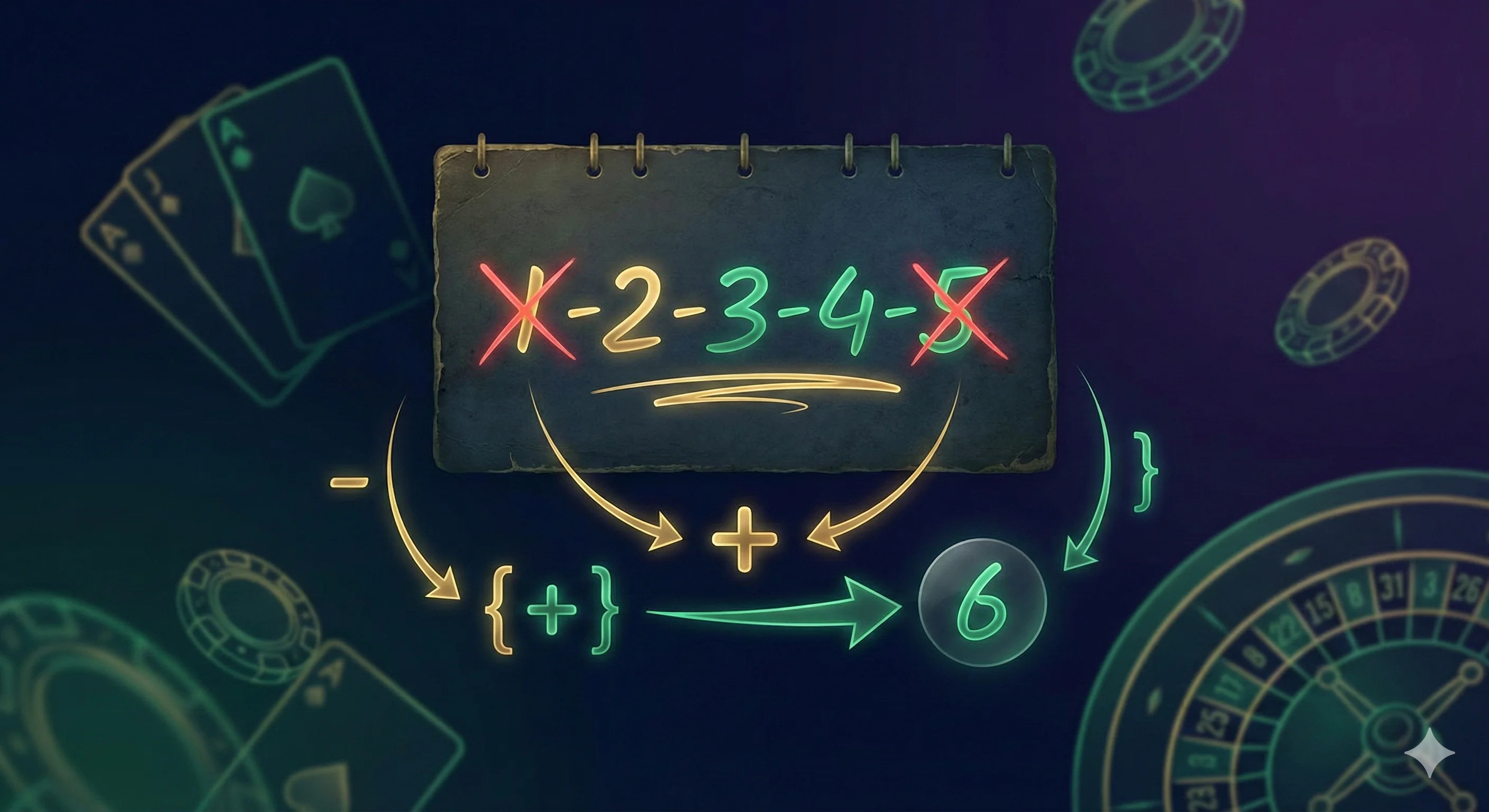
Step 4: After a WIN, Cross Out Both Numbers
You won $20? Congratulations. Now cross out the first AND last numbers:
10 - 20 - 40 - 20 - 10
New sequence: 20 - 40 - 20
Next bet: $20 + $20 = $40
Step 5: After a LOSS, Add the Lost Amount to the End
You lost $40? Add it to the end of the sequence:
20 - 40 - 20 - 40
Next bet: $20 + $40 = $60
Step 6: Repeat Until the Sequence is Empty
When all numbers are crossed out, you've achieved your profit goal. Time to walk away.
Real Session Walkthrough: 20 Bets in Action
Theory is nice. Let's see it work in practice.
Setup:
- Target profit: $100
- Starting sequence: 10 - 20 - 40 - 20 - 10
- Starting bankroll: $500
| Bet # | Sequence | Bet Amount | Result | Bankroll |
|---|---|---|---|---|
| 1 | 10-20-40-20-10 | $20 | WIN | $520 |
| 2 | 20-40-20 | $40 | LOSS | $480 |
| 3 | 20-40-20-40 | $60 | WIN | $540 |
| 4 | 40-20 | $60 | WIN | $600 |
| 5 | EMPTY | , | GOAL! | $600 |
Wait, that was only 5 bets?
Yes! With some luck, Labouchere finishes quickly. But let's look at a harder session:
| Bet # | Sequence | Bet Amount | Result | Bankroll |
|---|---|---|---|---|
| 1 | 10-20-40-20-10 | $20 | LOSS | $480 |
| 2 | 10-20-40-20-10-20 | $30 | LOSS | $450 |
| 3 | 10-20-40-20-10-20-30 | $40 | LOSS | $410 |
| 4 | 10-20-40-20-10-20-30-40 | $50 | WIN | $460 |
| 5 | 20-40-20-10-20-30 | $50 | WIN | $510 |
| 6 | 40-20-10-20 | $60 | LOSS | $450 |
| 7 | 40-20-10-20-60 | $100 | WIN | $550 |
| 8 | 20-10-20 | $40 | WIN | $590 |
| 9 | 10 | $10 | WIN | $600 |
| 10 | EMPTY | , | GOAL! | $600 |
See how the sequence grew after losses (bets 1-3), but wins chipped away at it? This is Labouchere in action. Need to track your own sessions? Try our interactive calculator:
Labouchere vs Other Betting Systems
How does Labouchere stack up against other popular systems?
| System | Bet Growth | Bankroll Needed | Risk Level | Best For |
|---|---|---|---|---|
| Labouchere | Moderate | Medium (30-50x goal) | Medium | Structured goals |
| Martingale | Exponential | Very High (128x bet) | Very High | Thrill-seekers |
| D'Alembert | Linear (+1 unit) | Low | Low | Beginners |
| Fibonacci | Moderate | Medium | Medium | Math lovers |
| Oscar's Grind | Slow | Low | Low | Patient players |
| Flat Betting | None | Low | Low | Low variance |
Bottom line: Labouchere offers the best balance of structure and flexibility. It's more controlled than Martingale, more aggressive than D'Alembert, and gives you a clear finish line.
For deeper risk analysis, check our Risk of Ruin Calculator.
Reverse Labouchere: The Opposite Approach
Regular Labouchere adds losses to the sequence. Reverse Labouchere does the opposite: you add wins and remove losses.
How it works:
- Start with a sequence (same as regular)
- WIN? Add the won amount to the end
- LOSE? Cross out first and last numbers
- Stop when sequence is empty OR you hit a profit target
Why use Reverse Labouchere?
- Capitalizes on winning streaks
- Limits losses (sequence shrinks when losing)
- You control when to stop
The catch:
- Wins more money but less often
- Requires discipline to walk away at the right time
- Most sessions end in small losses
Verdict: Use Regular Labouchere for consistent small wins. Use Reverse for high-risk, high-reward sessions.
Common Mistakes (And How to Avoid Them)
Mistake #1: Starting with Too Aggressive a Sequence
Wrong: 50 - 50 - 50 (first bet: $100)
Right: 10 - 10 - 10 - 10 - 10 (first bet: $20)
Your first bet should be 1-2% of your bankroll. If you're starting at $100 bets with a $500 bankroll, you're already dead.
Mistake #2: No Stop-Loss Rule
The Labouchere sequence can grow indefinitely. After 10 consecutive losses, your bets become massive.
Rule: If your sequence exceeds 10 numbers, STOP. Reset with a smaller goal tomorrow.
Mistake #3: Abandoning Mid-Sequence
You're down $200, the sequence is long, and you quit. Congratulations, you've locked in your loss.
Reality check: The system only works if you complete it. If you can't commit to finishing, don't start.
Mistake #4: Using Wrong Bet Types
Labouchere requires even-money bets (1:1 payout, ~50% win rate).
Good:
- Roulette: Red/Black, Odd/Even
- Sports: Point spreads at -110. If you bet on sports, understanding alternate spreads and the broader alt points markets can help you find better lines to pair with your Labouchere sequence.
- Blackjack: Main bet (with basic strategy). Look for special blackjack rule variations like Card Charlie to shrink the house edge further. Note: blackjack side bets like Match the Dealer resolve in a single round, use flat bets, not progressions. For a real-world high-stakes strategy, see the math behind Dana White's sessions. And for a look at Mikki Mase's claimed winning strategy compared to proven systems, the math is revealing.
Bad:
- Parlays
- Prop bets
- Any bet with odds far from 2.00
Use our Odds Converter to verify your bets qualify.
Mistake #5: Ignoring Table Limits
If your sequence grows, bets grow too. Eventually, you'll hit the table maximum.
Before you start: Check the table limit. Calculate the worst-case bet if you lose 10 times in a row. Can you still bet? If not, lower your goal.
Bankroll Requirements: How Much Do You Need?
The #1 question everyone asks. Here's the math:
Conservative Estimate
| Target Profit | Minimum Bankroll | Comfortable Bankroll |
|---|---|---|
| $50 | $1,500 (30x) | $2,500 (50x) |
| $100 | $3,000 (30x) | $5,000 (50x) |
| $500 | $15,000 (30x) | $25,000 (50x) |
Why So Much?
Labouchere can survive 5-7 consecutive losses. But losing streaks of 10+ happen, and they're more common than most players realize. When they do, your sequence and bets explode. Keeping a detailed loss log also matters for taxes, the 2026 gambling loss deduction rules now cap what you can write off.
Example: Starting sequence 10-10-10-10-10. After 10 losses:
10-10-10-10-10-20-30-50-80-130-210-340
Your next bet: $10 + $340 = $350
That's 17.5x your original $20 bet. Without enough bankroll, you're forced to quit mid-sequence, guaranteeing a loss.
Track your bankroll health with our Bankroll Growth Calculator. For 7 casino bankroll growth strategies rated by real math, including how Labouchere fits the snowball approach, see our complete guide.
The Math Behind Labouchere
For those who want to understand why the system works (and why it doesn't beat the house):
Why Crossing Out Numbers Works
When you win, you remove TWO numbers but only bet their SUM.
Example: Bet $20 (10 + 10), win $20, cross out both 10s.
You've now recovered $20 of your target while removing $20 from the sequence. This is why the system guarantees profit if you complete the sequence.
Why It Doesn't Beat the House
Every individual bet still has negative expected value:
For roulette (18/37 win rate, 1:1 payout):
That's -2.7% on every single bet. Labouchere doesn't change this. It just structures your session.
Simple version: The casino still wins 2.7% of every dollar you bet. Labouchere determines how much you bet and when, not whether you have an edge.
For more on expected value, see our Expected Value glossary entry.
Who Should Use Labouchere?
Good Fit:
- Disciplined bettors who can stick to a plan
- People who want structured sessions with clear goals
- Mid-bankroll players ($1,000-$10,000)
- Anyone using even-money bets (roulette, craps pass line, point spreads, or baccarat, see our 1000-shoe baccarat data)
- Sports bettors applying repeatable frameworks, Labouchere pairs naturally with a structured NBA betting system where -110 point spreads match the even-money requirement. For NFL-specific angles, our NFL betting strategy guide covers 5 data-backed systems you can combine with Labouchere sizing. For baseball, our analytical baseball betting system identifies +EV moneyline spots that can feed directly into a Labouchere sequence
Bad Fit:
- Chasers who can't walk away
- Small bankrolls (under $500)
- Players betting parlays or high-odds bets
- Anyone expecting to "beat" the casino
Honest take: If you've ever said "just one more bet to win it back," Labouchere might help you, or it might give you a more elaborate way to dig a deeper hole. The system requires discipline. If you don't have it, work on that first. And if you're wondering whether sports betting can replace your job, no progression system alone will get you there, you need a real edge first.
For a roulette-specific deep dive with Monte Carlo simulations and all 4 Labouchere variations, see our Labouchere roulette strategy guide. Looking for something simpler at the roulette table? The 24+8 system for roulette requires zero sequence tracking, just place two dozen bets plus 8 straight-up bets to cover 86% of the wheel on every spin. If you want even higher coverage, the $150 number coverage strategy covers 91.89% of the wheel, no sequences, no progressions, just flat coverage betting. And for live dealer fans, our Red Door Roulette strategy breaks down the bonus round math behind Evolution's most popular game show hybrid. Or if you prefer strategy-driven games over pure betting systems, try video poker Dream Card strategy, a game where optimal hold/discard decisions with a guaranteed wild card can push your RTP above 99%.
Final Thoughts: Is Labouchere Worth It?
The truth: Labouchere won't make you rich. The house edge doesn't disappear because you're crossing out numbers on a napkin.
But here's what it will do:
- Force you to set a specific profit goal before betting
- Prevent emotional "chase" betting after losses
- Give you a clear stopping point (win or lose)
- Make your sessions more intentional and less random
That's worth something. Maybe not billions, but your bankroll will thank you.
Ready to try it? Use our calculator above, start with a small goal, and see how it feels to bet with a plan instead of emotion.
If you want a step-by-step walkthrough with a worked example from the first number to bankroll blow-up, jump to our full Labouchere strategy guide, it pairs naturally with the system page you are reading now.
Want to explore more betting strategies?
- Kelly Criterion Calculator, Optimal bet sizing based on edge
- Risk of Ruin Calculator, What are your chances of going broke?
- Martingale Calculator, Compare with doubling-down approach
- Wong Teaser Strategy Calculator, NFL-specific betting system using key numbers 3 and 7 for +EV teasers
- Variance in Betting, Why short-term results are random
- Bankroll Management, Fundamentals of protecting your money
- Match the Dealer Blackjack Guide, Casino side bet with real strategy insights
- Special Blackjack Rule Variations Like Card Charlie, Rules that actually reduce the house edge
- Optimal Strategy for Triple Double Bonus Poker, Bankroll management for high-variance video poker
- Cajun Stud Poker guide, learn the best side bets and base game strategy
- Pot committed in poker explained, SPR math, examples, and free calculator
- Baseball Underdog Strategy, how underdog systems work for MLB betting with ROI data
- College Basketball Betting Systems, 12 ATS systems for NCAAB where Labouchere's cancellation method manages spread-betting bankrolls
- 7-spot keno bankroll management, session sizing and stop-loss rules for keno players
- Flush Fever Video Poker guide, session bankroll strategy for a bonus-driven video poker game
- Football Squares Rules & Pool Calculator, casual NFL pool game with EV analysis and payout structures Labouchere is one recovery system; the dogon calculator covers the martingale-style chase at any odds.
Frequently Asked Questions
Short-term, yes — it structures your betting and helps reach profit goals. Long-term, no betting system beats the house edge. Think of it as bankroll management, not a magic formula.
Start conservative: 1-1-1-1-1 for beginners. As you get comfortable, try 1-2-3-2-1. Avoid aggressive sequences like 10-20-30 unless you have deep pockets.
Absolutely! It works great with even-money bets (decimal odds 2.00, or -110 spreads). Just adjust your sequence based on your bankroll.
Labouchere. Bets grow slower, you need less bankroll, and one win doesn't have to recover everything. Martingale can bankrupt you in 7-8 consecutive losses.
Rule of thumb: 30-50x your target profit. Want to win $100? Have $3,000-$5,000 ready. This handles typical losing streaks.
Set a stop-loss rule BEFORE you start. If sequence exceeds 10 numbers, take a break. Reset with a smaller goal. Never chase.
Different goals. Regular Labouchere aims for consistent small wins. Reverse Labouchere chases big winning streaks but loses more often. Choose based on your style.
Casinos don't care about betting systems — the house edge still applies. Labouchere is 100% legal. The only thing that matters is staying within table limits.
Evgeniy Volkov
Verified ExpertFullstack developer with a background in mathematics. I build the calculators and game-style tools on ToolsGambling with Pixi.js and modern web tech, and every result uses transparent probability formulas you can verify yourself.